
Self-Employed
Getting a Mortgage When Self-Employed: UK Guide 2026
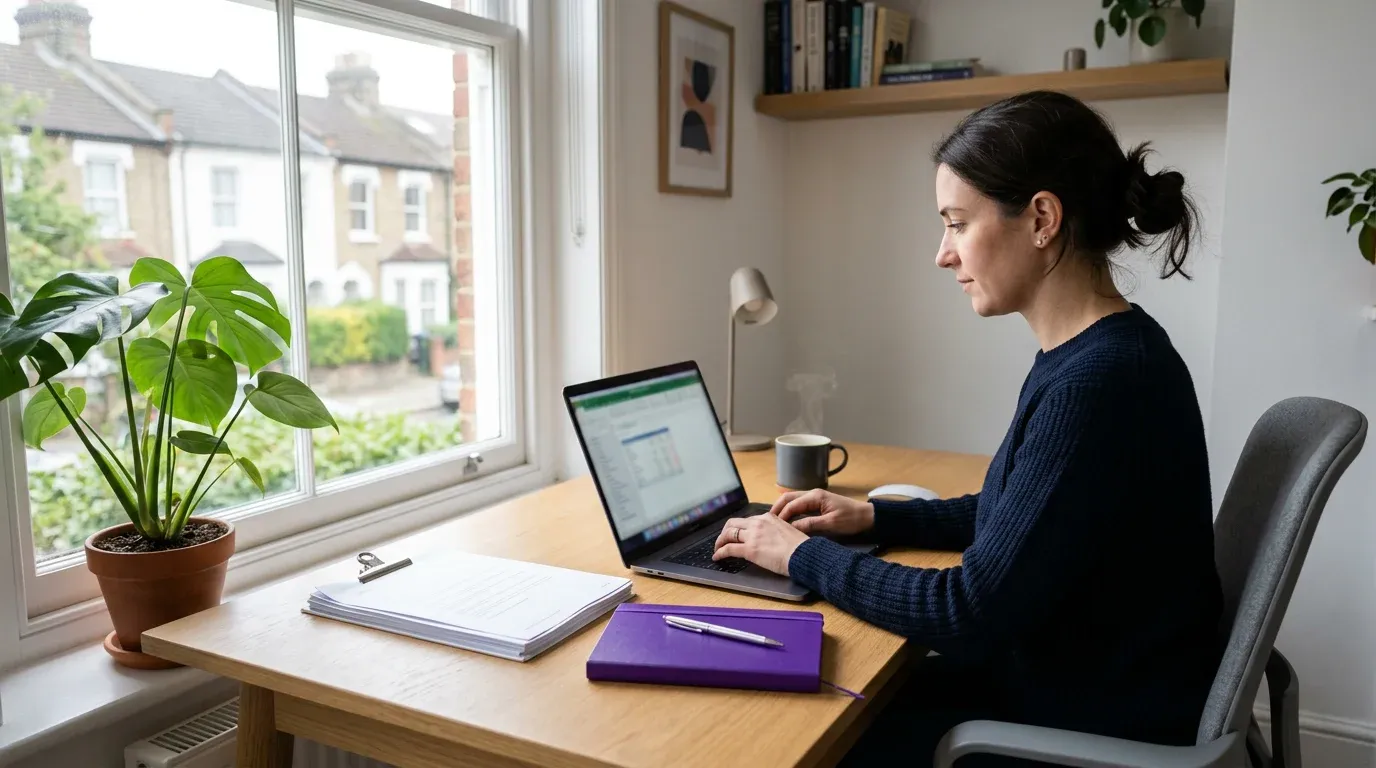
If you’re self-employed, you’ve probably heard that getting a mortgage is harder. The reality is more nuanced. It’s not harder — it’s different. Lenders need to understand your income, and the way they assess it depends on how your business is structured.
We work with self-employed clients every week across Berkshire, Buckinghamshire, and the wider Thames Valley. Sole traders, contractors, company directors, freelancers — each has a different route to approval. Here’s how it works.
Why Self-Employed Mortgages Feel Harder
Standard mortgage affordability calculators are built for PAYE employees. You enter a salary, the calculator multiplies it by 4 or 4.5, and you get a borrowing estimate. Simple.
Self-employed income doesn’t work that way. Your taxable income might fluctuate year to year. You might draw a small salary and take dividends. You might reinvest heavily in your business, showing lower profits on paper than your actual earnings.
Most lenders use one of two methods to assess self-employed income:
- Average of the last 2–3 years’ income: Typically your net profit (sole traders) or salary plus dividends (directors).
- Latest year’s income only: Some lenders will use just the most recent year, which is helpful if your income is growing.
The key is knowing which lenders use which method — and matching your application to the one that works best for your situation.
Not sure which lenders suit your income structure? We compare 90+ lenders and know exactly which ones work for self-employed borrowers.
What Documents Do Self-Employed Borrowers Need?
Most lenders will require:
- SA302 tax calculations: Usually the last 2 years, issued by HMRC.
- Tax year overviews: Confirming the figures on your SA302.
- Company accounts: If you’re a limited company director, your accountant-prepared accounts for the last 2–3 years.
- Business bank statements: Some lenders ask for 3–6 months’ worth.
- Proof of upcoming contracts: Useful for contractors to demonstrate ongoing income.
The cleaner your records, the smoother the process. If you’re planning to apply in the next 6–12 months, it’s worth talking to your accountant now about how your income will appear on your next tax return.
Sole Trader vs. Limited Company Director: What’s the Difference?
| Topic | Sole trader | Limited company director |
|---|---|---|
| What lenders usually use | Net profit from your SA302 (often 2-year average) | Typically salary + dividends; some specialists use share of net profit |
| Complexity | Simpler for most high-street lenders | More variables; right lender choice matters more |
| Borrowing power | Driven by declared profit after expenses | Can be lower on salary/dividends unless a profit-based lender is used |
Sole Traders
Lenders typically use your net profit from your SA302. If you earned £65,000 net profit last year and £60,000 the year before, most lenders will average those at £62,500 and multiply by 4–4.5x, giving borrowing capacity of £250,000–£281,000.
Limited Company Directors
This is where it gets more complex. Most lenders use salary plus dividends as your income. If you pay yourself a £12,570 salary and £40,000 in dividends, your assessable income is £52,570.
However, some specialist lenders will use your share of net profit instead, which can be significantly higher. If your company made £100,000 profit and you own 100% of shares, these lenders would assess you on £100,000 rather than £52,570 — nearly doubling your borrowing power.
How Long Do You Need to Be Self-Employed?
Most high-street lenders require at least 2 years of trading history with matching accounts or tax returns.
However, some lenders will consider applications with just 1 year of accounts, and a handful will look at contractors with 6 months’ self-employment history if you have a professional qualification or experience in your field.
If you’ve recently gone self-employed after a period of PAYE employment, some lenders may consider a combination of both income types.
Common Mistakes Self-Employed Borrowers Make
- Over-optimising for tax: Minimising your taxable income is great for your tax bill, but it directly reduces what you can borrow. Consider the trade-off before your next tax return.
- Applying to the wrong lender: Not all lenders are equal. Applying to one that doesn’t suit your structure wastes time and leaves a credit search on your file.
- Not preparing documents early: SA302s can take time to obtain. Start gathering them 3–6 months before you plan to apply.
- Assuming you can’t borrow: Many self-employed borrowers underestimate their borrowing power. The right lender and the right presentation can make a significant difference.
Self-employed and not sure where you stand? Book a free consultation — we’ll assess your borrowing power in minutes.
Self-Employed Remortgaging
If you already have a mortgage and you’re coming to the end of your fixed rate, remortgaging as a self-employed borrower follows the same principles. You’ll need updated accounts and SA302s.
The good news: if you’ve been paying your existing mortgage on time, lenders will view that positively. Many of our self-employed clients find they can switch to a better rate without any difficulty, especially if their income has been stable or growing.
For self-employed contractors specifically, there’s a growing number of lenders who understand contract-based income and will use your day rate to calculate affordability rather than your tax returns.
How a Broker Helps Self-Employed Borrowers
A whole-of-market mortgage broker adds significant value for self-employed applicants. We know which lenders use which income assessment methods, which ones are flexible on trading history, and which will accept your specific business structure. Our self-employed mortgage advice covers sole traders, limited company directors and contractors, including the lenders that assess on day rate rather than tax returns.
This isn’t about getting around the rules — it’s about presenting your application to the right lender in the right way.
Ready to explore your options? Book a free consultation — we compare 90+ lenders to find the right deal for you.

Gaurav Shukla
CEO · CeMAP DipFA
Gaurav has over a decade of experience spanning top brokerages, fintech startups, and wealth management firms. He specialises in high-value mortgages for professionals and athletes, bringing a strategic, client-first approach to every case.
A CeMAP and DipFA qualified adviser, he founded Home Me Mortgages with a simple goal: to make expert mortgage advice genuinely accessible across Berkshire, Buckinghamshire, and London. An avid football fan, you will often find Gaurav at local grounds taking in a game at the weekend.