
Buy-to-Let
Buy-to-Let Mortgages in Berkshire & Buckinghamshire: A 2026 Guide
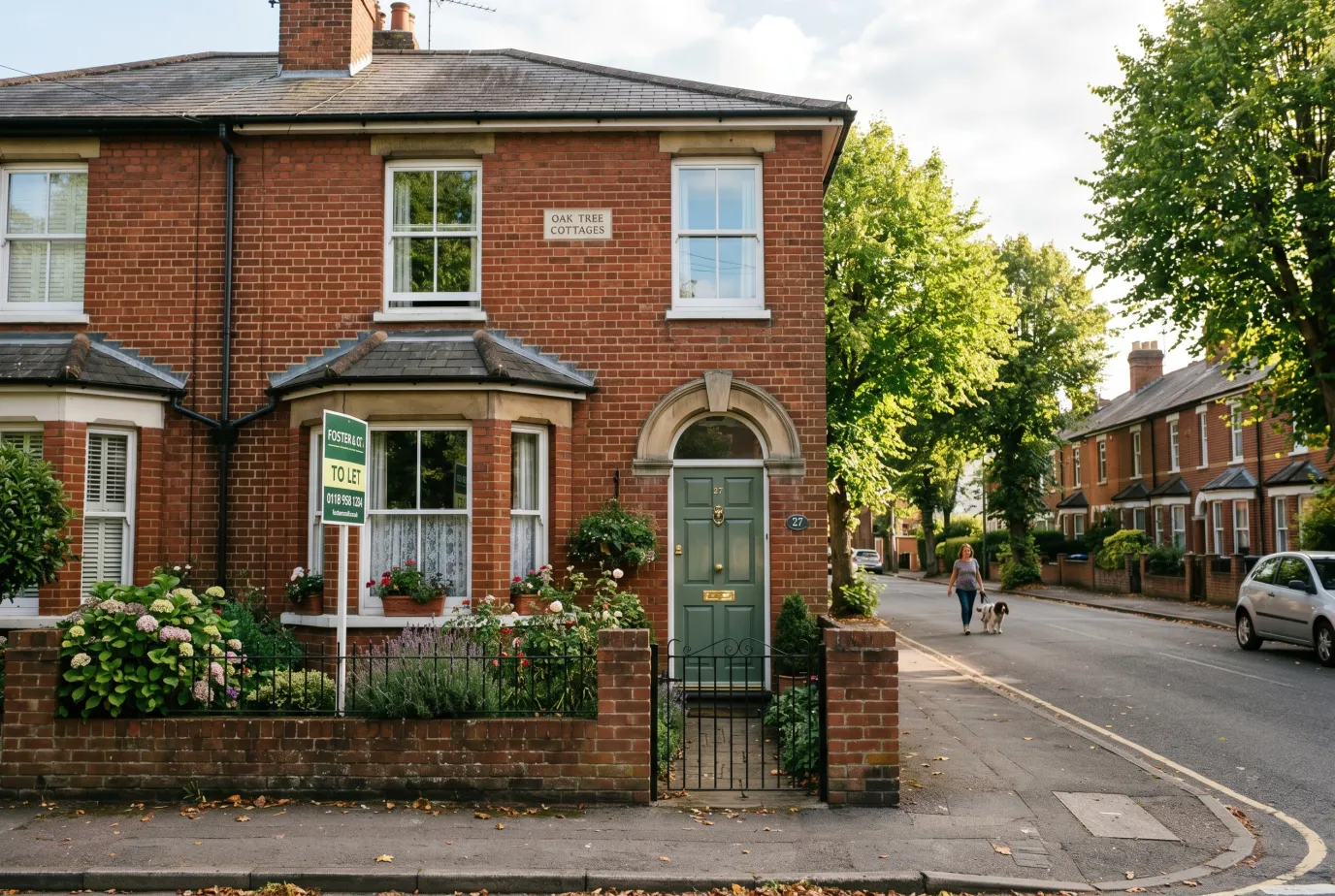
Buy-to-let in the South East works differently to buy-to-let almost anywhere else in the UK. Property prices are high, so deposits are large, and gross rental yields are lower than the headline national figures suggest. But the trade-off is one of the strongest tenant demand markets in the country, and capital growth that has historically outpaced higher-yield regions.
Quick Answer
Buy-to-let lenders in 2026 typically require a 25% deposit minimum, apply a 125–145% rental stress test against a stressed rate of 5.5–7%, and the 5% Stamp Duty surcharge applies on top of standard rates. Realistic gross yields in Berks and Bucks sit between 3.9% (Marlow) and 5.5% (Slough) — below the UK average. Most landlords in the region buy for tenant quality and capital growth rather than yield alone.
This guide is for anyone considering their first buy-to-let purchase in Berkshire or Buckinghamshire, or expanding an existing portfolio in the region. It covers what lenders are actually offering in 2026, what yield you can realistically expect, and the specific affordability rules that catch most landlords out.
How buy-to-let mortgages differ from residential mortgages
Buy-to-let mortgages are assessed on a different basis to the residential mortgage you took out on your own home. Three differences matter most.
1. Larger minimum deposits
Almost all BTL lenders require a 25% deposit (75% loan-to-value) as a starting point. The cheapest rates typically sit at 60% LTV, meaning a 40% deposit. A handful of specialist lenders go to 80% LTV but at meaningfully higher rates. In practice, this means a £400,000 property in High Wycombe needs a £100,000–£160,000 deposit.
2. Affordability is based on the rent, not your salary
Lenders apply a rental coverage ratio — typically 125% for basic-rate taxpayers and 145% for higher-rate taxpayers. The expected monthly rent has to cover the mortgage payment (calculated at a stressed interest rate, usually 5.5–8%) by that percentage. This is the calculation that most often fails in the South East, because purchase prices are high relative to achievable rents.
3. Most buy-to-let mortgages are interest-only
Around 80% of BTL mortgages are taken on an interest-only basis, which keeps monthly cash flow positive. You don’t pay down the capital — the property itself (and any growth in its value) acts as the repayment strategy when you eventually sell or refinance.
Rental yields: what you’ll actually achieve in Berks and Bucks
Be careful with headline national figures. The UK average gross rental yield reached 7.18% in Q4 2025 according to UK Finance, but the South East was meaningfully lower at 6.3% according to Paragon’s Q4 2025 yield report. Within the South East, yields vary widely by town and property type.
Indicative gross yields for the region, based on recent average rents and Land Registry pricing:
| Location | Avg. property price | Avg. monthly rent | Indicative gross yield |
|---|---|---|---|
| Reading | £370,000 | £1,650 | ~5.3% |
| Slough | £345,000 | £1,575 | ~5.5% |
| High Wycombe | £400,000 | £1,500 | ~4.5% |
| Aylesbury | £330,000 | £1,425 | ~5.2% |
| Maidenhead | £530,000 | £1,850 | ~4.2% |
| Marlow | £650,000 | £2,100 | ~3.9% |
Sources: HM Land Registry UK House Price Index (property prices) and ONS Private Rent and House Prices (rents), most recent releases. Figures rounded; actual yields depend on property type, condition, and tenant profile.
Two observations matter here. First, the cheaper end of the region (Aylesbury, Slough, Reading) consistently produces better yields than the prime end (Marlow, Maidenhead). Second, no part of Berkshire or Buckinghamshire offers the 7–9% yields available in parts of the North East or Wales — landlords investing here are usually doing so for capital growth and tenant quality, not yield alone.
The stress test: why some applications fail before they start
The single most common reason a BTL application fails in the South East is the rental stress test. Here’s how it works in practice.
Take a £400,000 property in High Wycombe with a £100,000 deposit (75% LTV, £300,000 loan). A typical lender will:
- Apply a stressed interest rate of around 5.5% (for a 5-year fixed) or 7% (for a 2-year fixed).
- Require the rent to cover that stressed payment by 125% (basic-rate taxpayer) or 145% (higher-rate taxpayer).
At 5.5% stressed rate, the interest-only payment on £300,000 is £1,375/month. For a higher-rate taxpayer at 145% coverage, the property needs to achieve £1,994/month in rent. If the realistic market rent is £1,500/month, the application fails — even though £1,500 covers the actual mortgage payment comfortably.
There are three legitimate ways around this:
- 5-year fixed rates: Lenders apply a lower stressed rate to 5-year fixes (typically the pay rate, not pay rate + 2%). This often makes a deal that fails on a 2-year fix work on a 5-year.
- Top-slicing: Some lenders allow your personal income to cover any shortfall between the rental income required and what the property actually achieves. This is increasingly common but criteria vary widely.
- Larger deposit: Dropping LTV from 75% to 65% or 60% reduces the loan size, the stressed payment, and therefore the rent required to pass the test.
The tax position: what’s changed and what it means
Buy-to-let tax treatment has changed substantially over the last decade. The key points for any new landlord to understand:
Mortgage interest relief is restricted
You can no longer deduct mortgage interest from your rental income before calculating tax. Instead, you receive a 20% tax credit on the interest amount. For higher and additional-rate taxpayers, this means buy-to-let is significantly less tax-efficient as a personal investment than it was before 2020.
Stamp Duty surcharge
An additional 5% Stamp Duty surcharge applies to second properties and buy-to-let purchases on top of the standard rates (as of late 2024). On a £400,000 BTL purchase, this adds £20,000 to the upfront cost — a figure that needs building into your yield calculation.
Limited company structures
A growing share of new BTL purchases are made through a limited company (a Special Purpose Vehicle, or SPV). Inside a limited company, mortgage interest remains a fully deductible business expense, and profits are taxed at corporation tax rates rather than personal income tax. For higher-rate taxpayers building a portfolio, this is usually the more tax-efficient route — but it comes with set-up costs, ongoing accountancy fees, and slightly higher mortgage rates.
This is a decision that should be made with both a mortgage broker and an accountant. We work alongside qualified accountants where clients need that joined-up view. More on our buy-to-let mortgage advice.
A realistic starting point: what you’ll need to commit
For a typical £400,000 BTL purchase in Berkshire or Buckinghamshire, here’s what you should plan for upfront:
| Cost | Indicative amount |
|---|---|
| Deposit (25%) | £100,000 |
| Stamp Duty (incl. 5% surcharge) | ~£27,500 |
| Mortgage product fee | £995–£2,000 |
| Valuation fee | £300–£700 |
| Conveyancing | £1,500–£3,000 |
| Survey (recommended) | £500–£1,500 |
| Total upfront | ~£130,000–£135,000 |
On top of this, you should hold a working contingency — at least 3–6 months of mortgage payments — for void periods, repairs, and the gaps between tenancies.
Common mistakes landlords make in this region
- Underestimating voids and management costs. Realistic net yield is usually 1.5–2.5% below gross yield once management fees (8–12% of rent), insurance, maintenance, and 2–4 weeks of void per year are accounted for.
- Buying for yield in a low-yield market. If pure yield is your goal, Berks and Bucks are usually the wrong region. If tenant quality, capital growth, and proximity to London commuter rail matter, they’re among the strongest options in the country.
- Not stress-testing personally. Running your own numbers at a 7% mortgage rate (rather than today’s 4–5%) tells you whether the property still works if rates rise during your hold period.
- Using the same lender for every property. Most lenders cap the number of BTL properties they’ll lend on to a single landlord. Strategic landlords use multiple lenders from the start to keep options open as the portfolio grows.
- Ignoring EPC requirements. Properties let on new tenancies must hold a minimum EPC rating of E, with proposed reforms tightening this further. Older properties in the region (particularly in Marlow, Henley and parts of Aylesbury) often need work to comply — factor this into your purchase.
Frequently asked questions
Can I get a buy-to-let mortgage as a first-time landlord?
Yes, although your lender choice is narrower than for an experienced landlord. First-time landlords are usually expected to be homeowners already and to meet a minimum personal income requirement (often £25,000+). Some specialist lenders accept first-time landlords who are also first-time buyers, but the criteria are tighter.
Are buy-to-let mortgages regulated by the FCA?
Most consumer buy-to-let mortgages are not regulated by the FCA. A small subset — for example, where you’re letting to a close family member — fall under “regulated BTL” and are treated more like residential mortgages. Your broker will confirm which regime applies to your purchase.
How long does a buy-to-let mortgage application take?
A straightforward BTL application typically takes 4–8 weeks from full application to offer, similar to a residential mortgage. Limited company applications and portfolio landlord cases can take longer because of the additional underwriting required on the SPV structure or the existing portfolio.
Do I need a personal income to get a buy-to-let mortgage?
Most lenders require a minimum personal income of £25,000 for an individual landlord, although some specialist lenders waive this for experienced portfolio landlords with substantial existing rental income.
Talk to a whole-of-market buy-to-let broker
Buy-to-let lending is one of the most fragmented parts of the UK mortgage market. Mainstream lenders, specialist BTL lenders, limited company lenders, and portfolio landlord lenders all assess applications differently — and the right one for your situation often isn’t the cheapest headline rate.
Whole-of-market · Based in Marlow, serving the UK
Related guides
Frequently asked questions
- What deposit do I need for a buy-to-let mortgage in 2026?
- Most UK buy-to-let lenders require a minimum 25% deposit (75% loan-to-value). The cheapest rates typically sit at 60% LTV, meaning a 40% deposit. A handful of specialist lenders go to 80% LTV but at meaningfully higher rates. For a £400,000 property in High Wycombe, that means committing £100,000–£160,000 as a deposit before any other costs.
- What rental yield can I expect in Berkshire and Buckinghamshire?
- Gross rental yields in Berks and Bucks typically range from around 3.9% (Marlow) to 5.5% (Slough). The cheaper end of the region — Aylesbury, Slough, Reading — produces better yields than prime areas like Maidenhead and Marlow. The South East as a whole averaged around 6.3% gross yield in Q4 2025 according to Paragon, below the UK average of 7.18%. Landlords investing here are usually doing so for capital growth and tenant quality, not yield alone.
- How does the buy-to-let rental stress test work?
- Lenders apply a rental coverage ratio — typically 125% for basic-rate taxpayers and 145% for higher-rate taxpayers — against a stressed interest rate of around 5.5% (5-year fixes) or 7% (2-year fixes). The expected monthly rent must cover the stressed mortgage payment by that percentage. This is the single most common reason BTL applications fail in the South East, because purchase prices are high relative to achievable rents.
- Should I buy a buy-to-let in my own name or through a limited company?
- Higher-rate taxpayers building a portfolio usually find a limited company (SPV) more tax-efficient because mortgage interest remains fully deductible inside a company, and profits are taxed at corporation tax rates rather than personal income tax. The trade-offs are set-up costs, ongoing accountancy fees, slightly higher mortgage rates, and the 5% Stamp Duty surcharge applying from the first pound. This is a decision to make with both a mortgage broker and an accountant.
- What ongoing costs should I budget for as a Berks/Bucks landlord?
- Realistic net yield is usually 1.5–2.5% below gross yield once management fees (8–12% of rent), insurance, maintenance, and 2–4 weeks of voids per year are accounted for. You should also hold a working contingency of at least 3–6 months of mortgage payments. From late 2024, the additional Stamp Duty surcharge on second properties is 5%, which adds around £20,000 to a £400,000 purchase.

Gaurav Shukla
CEO · CeMAP DipFA
Gaurav has over a decade of experience spanning top brokerages, fintech startups, and wealth management firms. He specialises in high-value mortgages for professionals and athletes, bringing a strategic, client-first approach to every case.
A CeMAP and DipFA qualified adviser, he founded Home Me Mortgages with a simple goal: to make expert mortgage advice genuinely accessible across Berkshire, Buckinghamshire, and London. An avid football fan, you will often find Gaurav at local grounds taking in a game at the weekend.